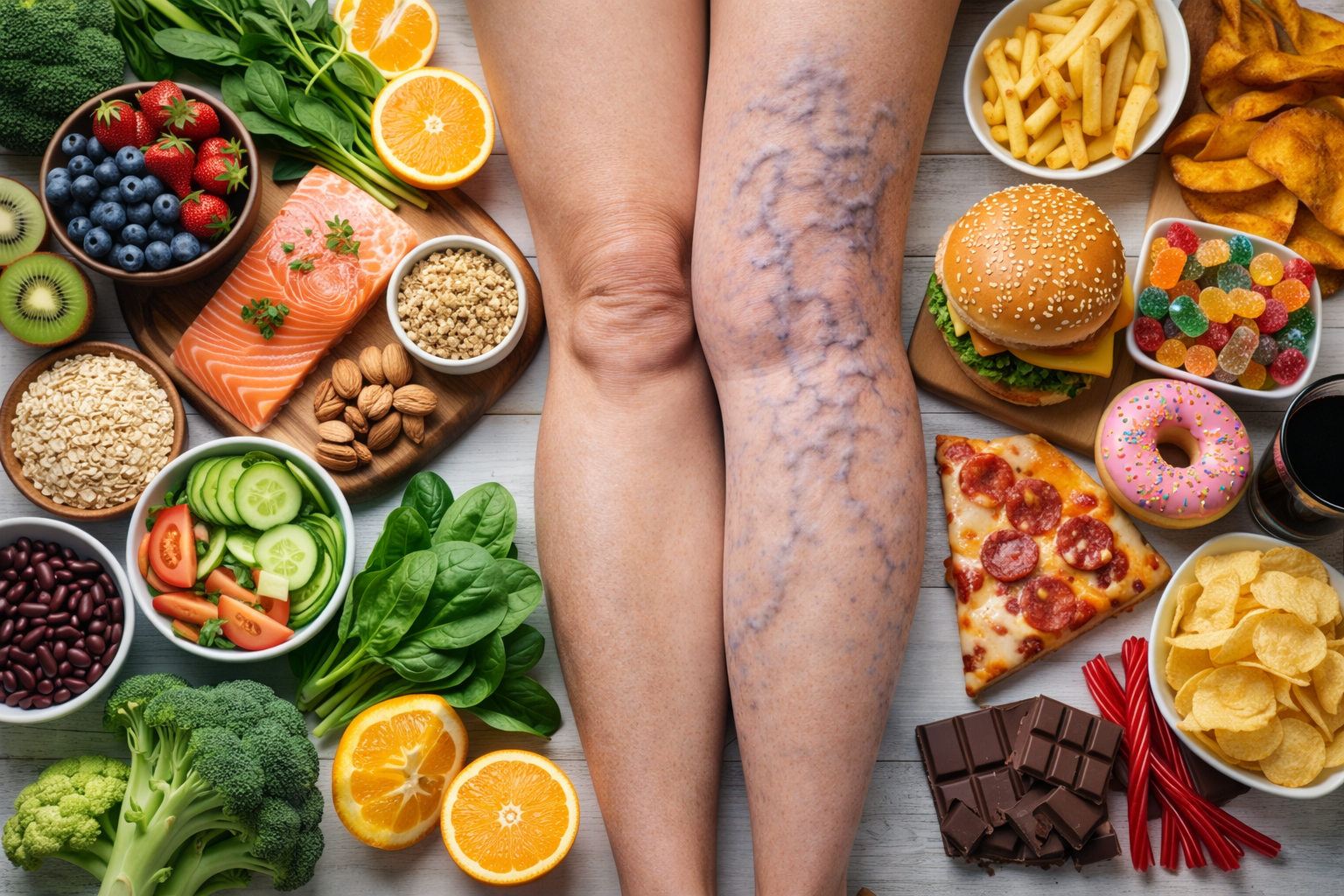

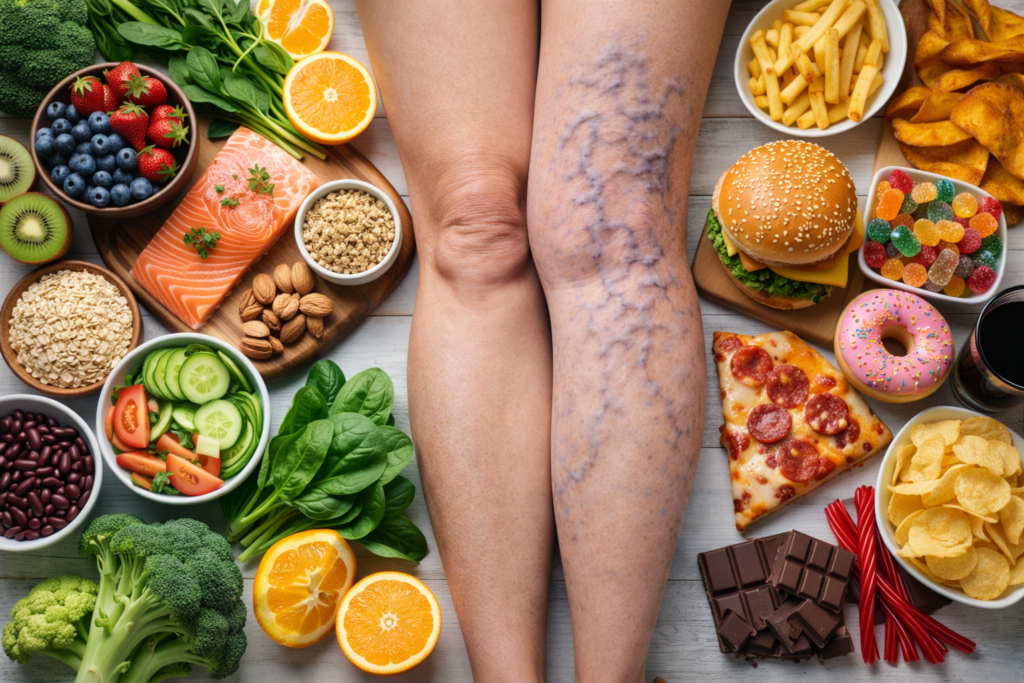
If you have varicose veins, it’s normal to wonder whether what you eat can make your symptoms better- or worse. Diet won’t “fix” damaged vein valves, but it absolutely can influence things like swelling, inflammation, constipation, and body weight, all of which affect how your legs feel day to day.
In this article, Dr Darryl Lim, a vascular and varicose vein specialist in Singapore, shares the foods that tend to support vein health, the ones that commonly trigger heavier legs or ankle swelling, and a realistic way to eat that helps without becoming restrictive.
First, a Reality Check About Diet and Varicose Veins
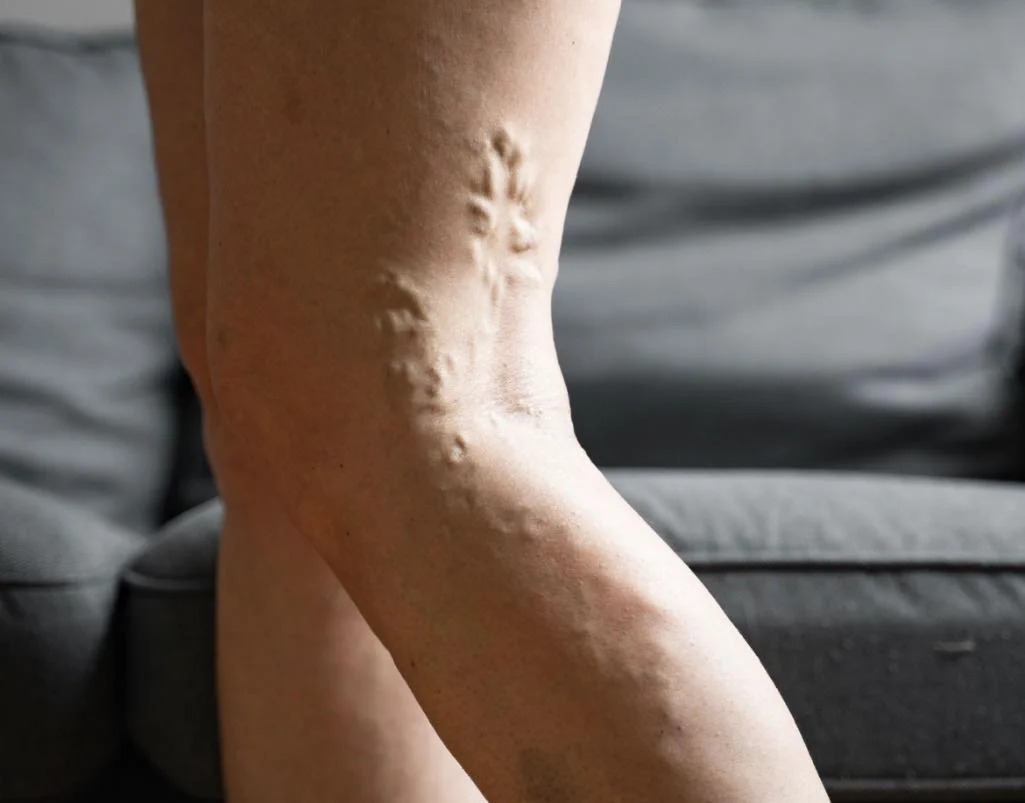
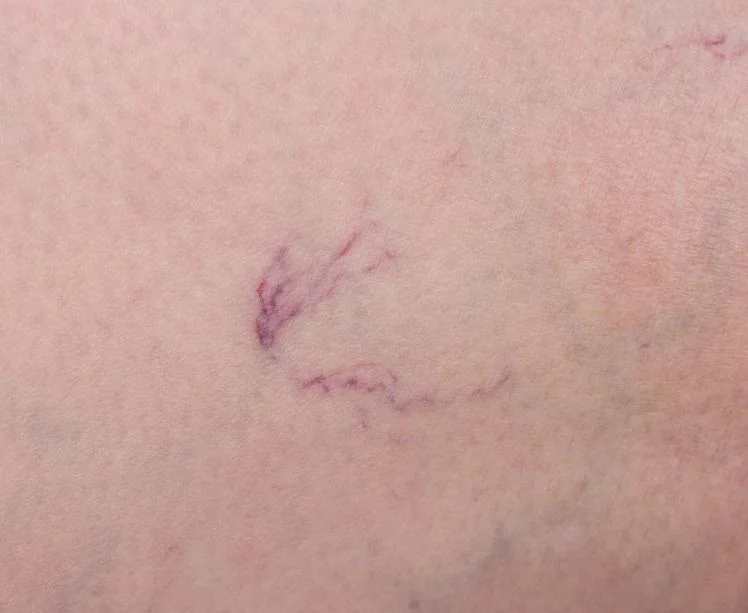
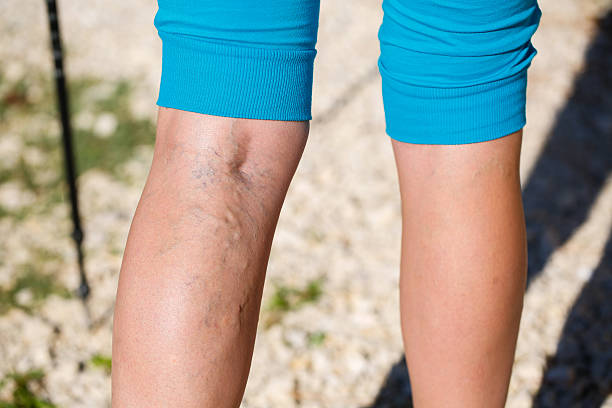
Varicose veins are caused by vein valves that don’t close properly, allowing blood to flow backwards and pool in the legs (often described as chronic venous insufficiency or venous reflux). Food can’t repair valves once they’ve failed.
However, food choices can:
- Reduce leg swelling
- Lower inflammation
- Improve circulation efficiency
- Support healthy body weight
- Reduce pressure on leg veins
Think of diet as symptom control and disease support, not a standalone cure.
Foods You Should Eat If You Have Varicose Veins
1) High-fibre foods (helps constipation and reduces pressure)
Constipation and straining increase abdominal pressure, which can worsen venous reflux and make legs feel heavier.
Good options:
- Oats and whole grains
- Brown rice and quinoa
- Beans and lentils
- Chia seeds and flaxseeds
- Vegetables (broccoli, carrots, leafy greens)
If you’ve ever noticed your legs feel worse when you’re constipated, you’re not imagining it! This is one of the simplest dietary wins.
2) Flavonoid-rich fruits and vegetables (supports vessel health)
Flavonoids are plant compounds linked to healthier blood vessels and lower inflammation. Many patients know this as “eat colourful foods”, and it’s genuinely a good rule.
Great choices:
- Berries (blueberries, strawberries, raspberries)
- Citrus fruits (oranges, lemons, grapefruit)
- Apples and pears
- Onions and garlic
- Dark leafy greens
Practical tip: aim for “two colours” at most meals. It’s an easy habit, not a strict diet.
3) Potassium-rich foods (helps reduce fluid retention)
Potassium helps balance sodium and can reduce water retention — particularly helpful if you’re prone to ankle swelling by the end of the day.
Include:
- Bananas
- Avocados
- Sweet potatoes
- Spinach
- Beans and legumes
This matters most when your salt intake is high (takeaway meals, soups, instant noodles, processed snacks).
4) Omega-3 fats (anti-inflammatory support)
Omega-3s help with inflammation and cardiovascular health overall. They’re not “vein medicine”, but they’re part of a sensible long-term pattern.
Sources:
- Fatty fish (salmon, sardines, mackerel)
- Walnuts
- Chia seeds
- Flaxseeds
Aim for fish a couple of times a week if you can. If not, plant sources are still useful.
5) Lean protein (supports muscle tone, including the calf pump)
Your calf muscles are an essential part of your venous circulation system. They help squeeze blood back up the leg towards your heart when you walk. Adequate protein supports muscle maintenance, especially if you’re active or trying to lose weight.
Good options:
- Fish
- Eggs
- Lean poultry
- Tofu or tempeh
- Greek yoghurt
6) Fluids (supports circulation and prevents constipation)
Dehydration doesn’t “cause” varicose veins, but it can make swelling feel worse in some people, and it definitely worsens constipation.
Best choices:
- Water
- Herbal teas
- Unsweetened drinks
If you drink coffee, just make sure your overall fluid intake is still decent.
Foods that can make varicose vein symptoms worse (limit these)
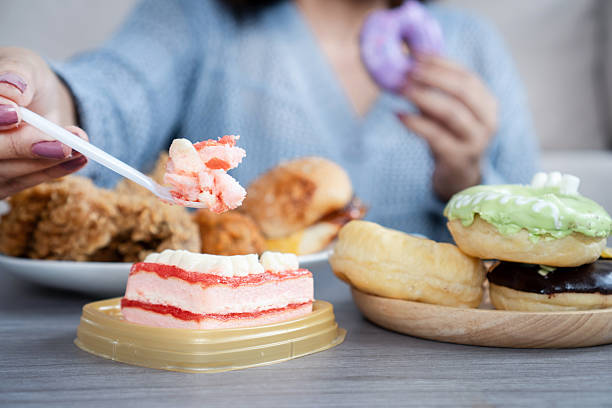
If you’re searching “foods that make varicose veins worse”, these are the usual culprits- not because they damage valves, but because they worsen swelling and inflammation or contribute to weight gain.
1) Salty foods (water retention and heavier legs)
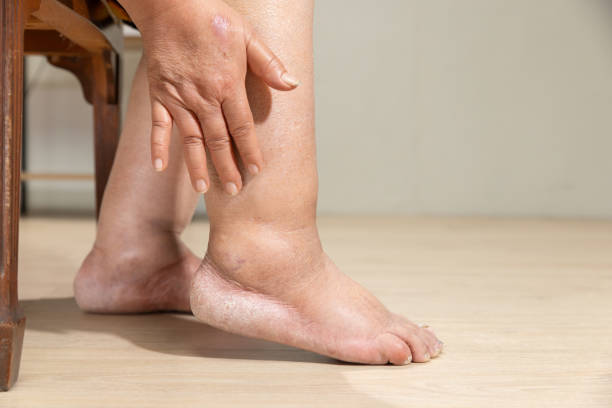
Too much sodium pulls water into the tissues. Many patients feel this as ankle swelling and tight shoes by late afternoon.
Limit:
- Processed foods
- Fast food
- Instant noodles
- Canned soups
- Salty snacks
If you only change one thing: reduce salty meals on days you know you’ll be standing for long hours.
2) Ultra-processed and sugary foods (inflammation and weight)
Highly processed foods are easy to overeat and tend to drive inflammation and weight gain, both of which make venous symptoms harder to control.
Limit:
- Sweets and pastries
- Sugary drinks
- Refined carbs (white bread, many packaged snacks)
- Fried “snack foods”
You don’t have to be perfect. Just reducing the frequency usually helps.
3) Alcohol (swelling, dehydration, and next-day heaviness)
Alcohol can worsen swelling for some people and commonly disrupts sleep and hydration, which is why legs can feel heavier the next day.
If you drink:
- Keep it moderate
- Avoid frequent “big nights” if you notice swelling afterwards
- Hydrate alongside alcohol
4) Too much caffeine (mainly if hydration and sleep suffer)
Caffeine itself isn’t the enemy. The problem is when caffeine replaces fluids, or when sleep quality drops- both of which can make symptoms feel worse.
Be cautious with:
- Multiple strong coffees daily
- Energy drinks (often high sugar + stimulants)
5) Foods that drive weight gain (pressure on leg veins)
Excess weight increases pressure in the leg veins and makes reflux symptoms more noticeable.
Limit:
- Fried foods
- High-calorie snacks
- Frequent late-night eating
- Large portions of processed carbs
If weight loss is a goal, small consistent changes beat aggressive “crash diets”.
Simple swaps that work (without feeling like a diet)
- Instant noodles → noodles with less soup + add vegetables + reduce seasoning
- Crisps → nuts, fruit, yoghurt, or popcorn (less salt)
- Sugary drinks → sparkling water, unsweetened tea
- White bread/pastries → oats, wholegrain toast, or fruit + yoghurt
- Takeaway meals → split portions, add a salad, or choose grilled options
A sample vein-friendly day of eating
Breakfast:
Oatmeal with berries, chia seeds, and a handful of nuts
Lunch:
Grilled salmon (or tofu), and a leafy green salad with olive oil
Snack:
Apple with walnuts, or yoghurt with fruit
Dinner:
Stir-fried vegetables with tofu or lean chicken, plus brown rice
Hydration:
Water through the day, herbal tea in the evening
This is basically a Mediterranean-style pattern. Nothing fancy, just steady and repeatable.
Can diet prevent varicose veins from getting worse?
Diet can help with symptoms, especially swelling and heaviness, and it supports weight management, which in turn reduces strain on veins. But it can’t stop valve failure once reflux has developed.
Diet works best when paired with:
- Regular walking (even short walks help the calf pump)
- Leg elevation at the end of the day
- Compression stockings (when appropriate)
- Vascular specialist treatment when needed
When Food Isn’t Enough
If you still experience:
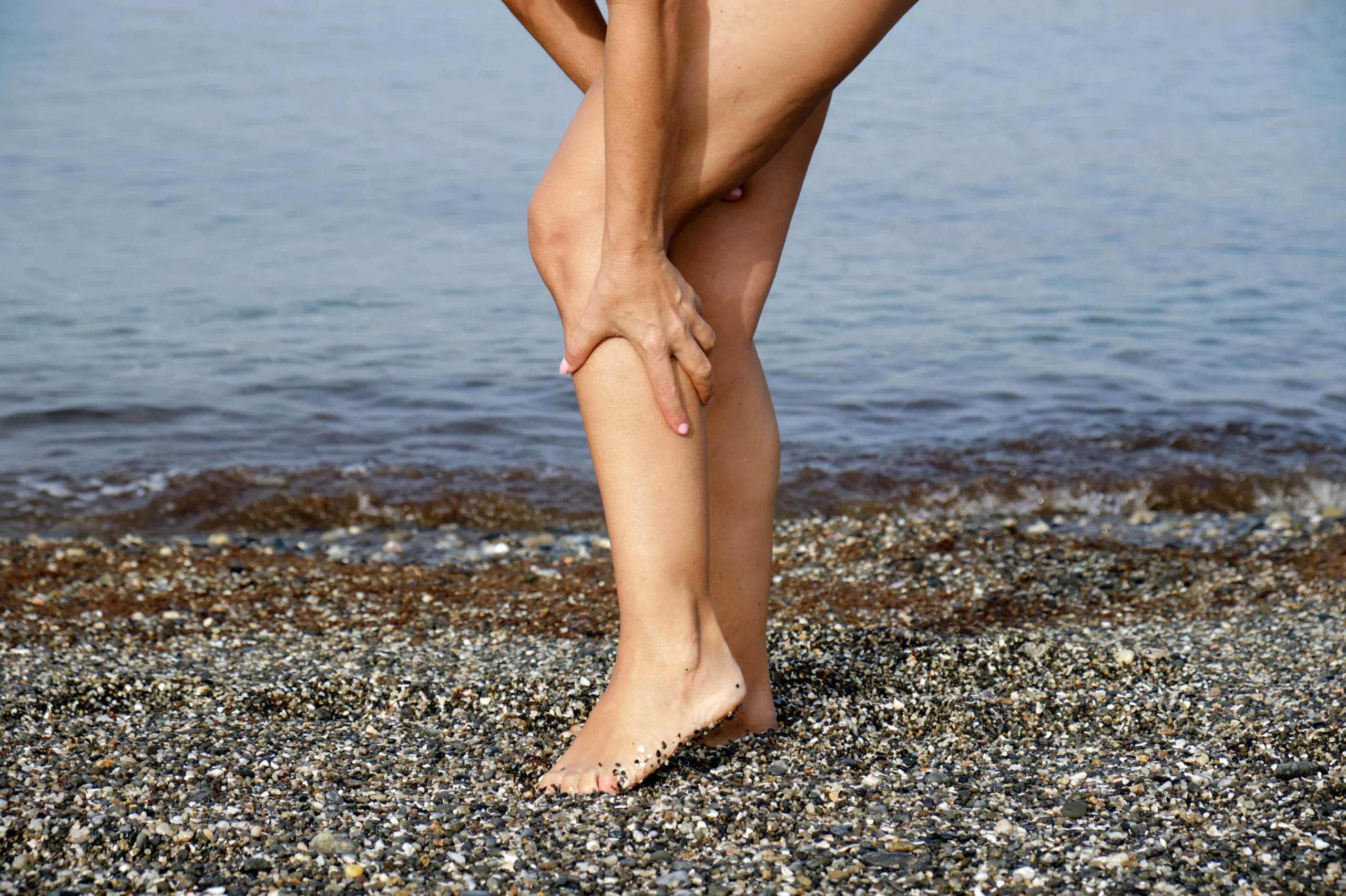
- Daily leg heaviness
- Persistent swelling
- Skin discoloration
- Visible varicose veins with pain
…then diet alone is not sufficient.
At that stage, a proper vein evaluation is important to identify whether venous reflux is present and whether treatment is needed.
How Varicose Vein Problems Are Properly Assessed.
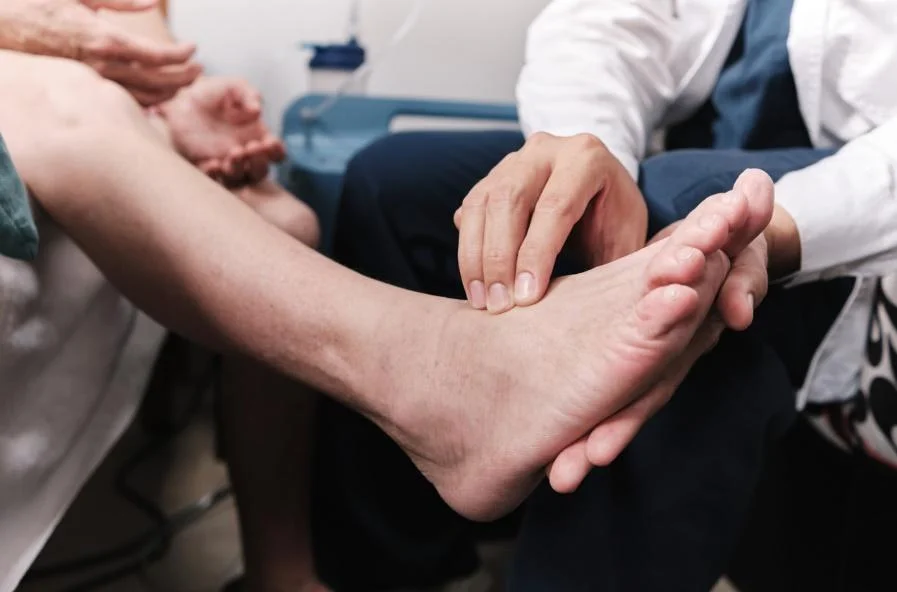
A proper assessment isn’t just “looking at the veins”. Dr Darryl Lim will usually start with a clinical examination to understand your symptoms, daily triggers (like long standing hours), and any skin changes around the ankle.
The key test is a duplex ultrasound, which allows Dr Lim to:
- Check vein valve function
- Detect reflux (backward blood flow)
- Identify which veins are involved and where the reflux is coming from
This mapping step is important, because it ensures any treatment targets the underlying causes, and not just the visible veins or surface symptoms.
The Bottom Line
Food choices matter. But they’re supportive, not curative.
A diet higher in fibre, fruits and vegetables, potassium-rich foods, and healthy fats can reduce swelling and inflammation and help your legs feel lighter. At the same time, keeping salt, ultra-processed foods, and excess alcohol in check can reduce symptom flare-ups.
If symptoms persist despite good habits, it’s worth getting your veins assessed properly, because addressing reflux is what usually makes the biggest long-term difference.
Frequently Asked Questions
Can certain foods cure varicose veins?
No. Food can’t repair damaged vein valves, but it can reduce swelling, constipation, and inflammation that worsen symptoms.
Is coffee bad for varicose veins?
Moderate coffee is usually fine. Problems tend to come from poor hydration, too much caffeine, or disrupted sleep.
Does being vegetarian help varicose veins?
It can, especially if it’s high in fibre and whole foods. Just make sure key nutrients (iron, B12, protein) are covered.
Should I take supplements?
Only if advised. Whole foods are preferred unless you have a deficiency. Some “vein supplements” may help symptoms in selected patients, but they don’t replace proper assessment and treatment.