
IVC Filter Insertion/Retrieval
What is an IVC Filter?
An Inferior Vena Cava (IVC) filter is a small, cage-like medical device designed to prevent blood clots from traveling from the lower body to the lungs. It is placed inside the inferior vena cava – the main vein that carries blood from the legs back to the heart. By trapping clots before they reach the lungs, an IVC filter helps reduce the risk of a potentially life-threatening condition known as pulmonary embolism. To learn more about how these devices work and who may benefit from one, read our guide to IVC filters.
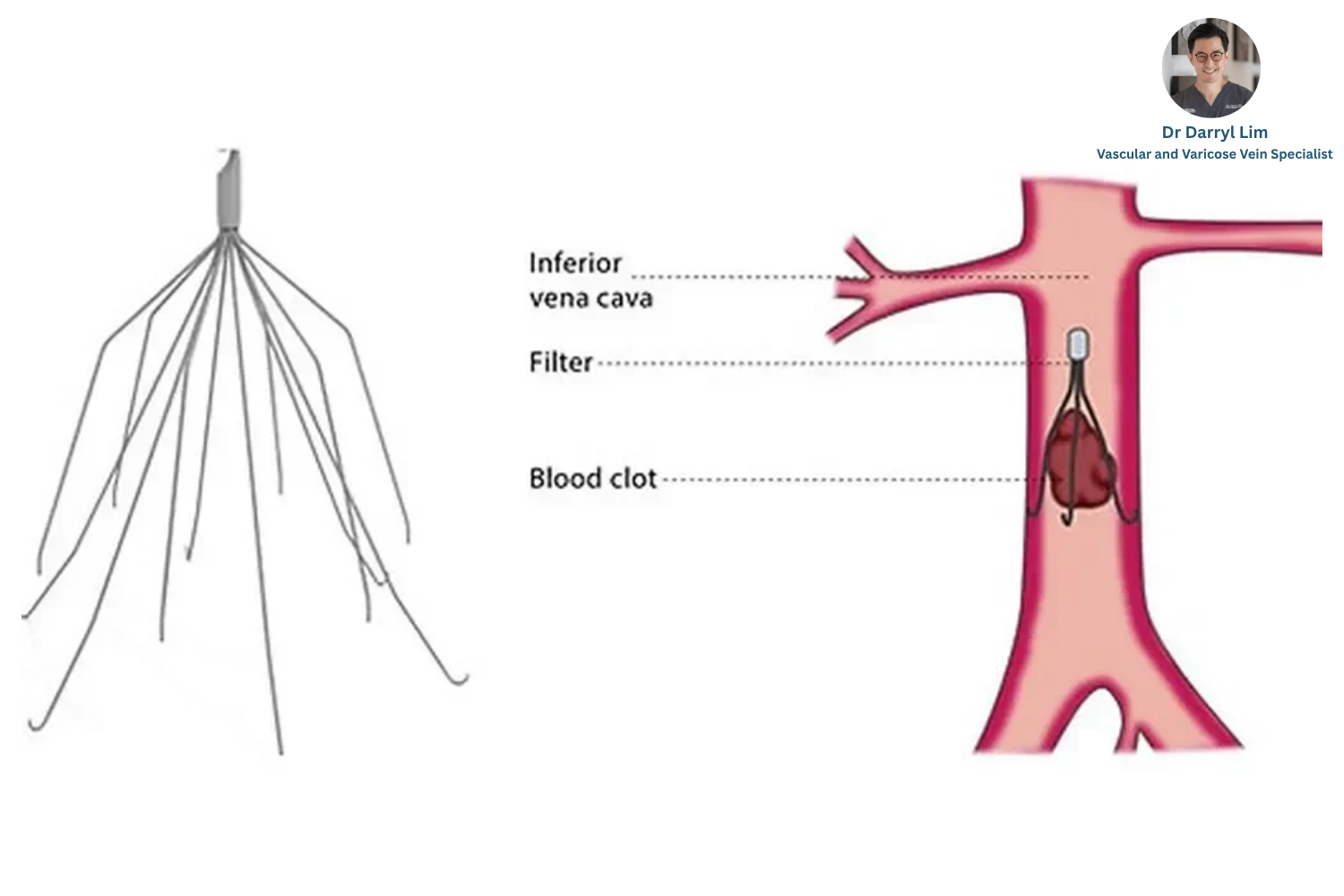
Why is IVC Filter Insertion needed?
IVC filter insertion is recommended for patients who are at risk of developing dangerous blood clots, particularly when standard treatment with blood-thinning medication is not suitable or effective. This includes patients with deep vein thrombosis (DVT), those who cannot tolerate anticoagulants due to bleeding risks, or individuals who continue to develop clots despite medication.
By acting as a physical barrier, the IVC filter provides an added layer of protection against pulmonary embolism.
Pre-Procedural Evaluation
Before undergoing IVC filter insertion, a thorough medical evaluation will be conducted to assess your condition and determine whether the procedure is appropriate. Imaging studies such as ultrasound or CT scans may be performed to evaluate the presence of blood clots and the anatomy of your veins.
Your vascular specialist will also review your medical history, current medications, and overall risk factors to ensure the procedure is safe and tailored to your specific needs.
How is the IVC Filter Insertion procedure performed?
On the day of the procedure, you may be advised to fast for several hours beforehand. The procedure is typically performed under local anesthesia with sedation.
A small incision is made in the neck or groin to access a vein, and a catheter is carefully guided into the inferior vena cava using real-time imaging. The IVC filter is then deployed in the correct position, where it expands and attaches to the vein walls.
The procedure usually takes less than an hour and is minimally invasive, allowing for a relatively quick recovery.
On the procedure day, patients are advised to abstain from eating and drinking for at least 6 hours beforehand. The procedure is typically performed under general or spinal anesthesia to enhance patient comfort, although local anesthesia with sedation is also an option.
IVC Filter Retrieval: Why and How is it done?
Many IVC filters are designed to be temporary and should be removed once the risk of blood clots has decreased. Timely retrieval is important to reduce the risk of long-term complications such as filter migration, blockage, or fracture.
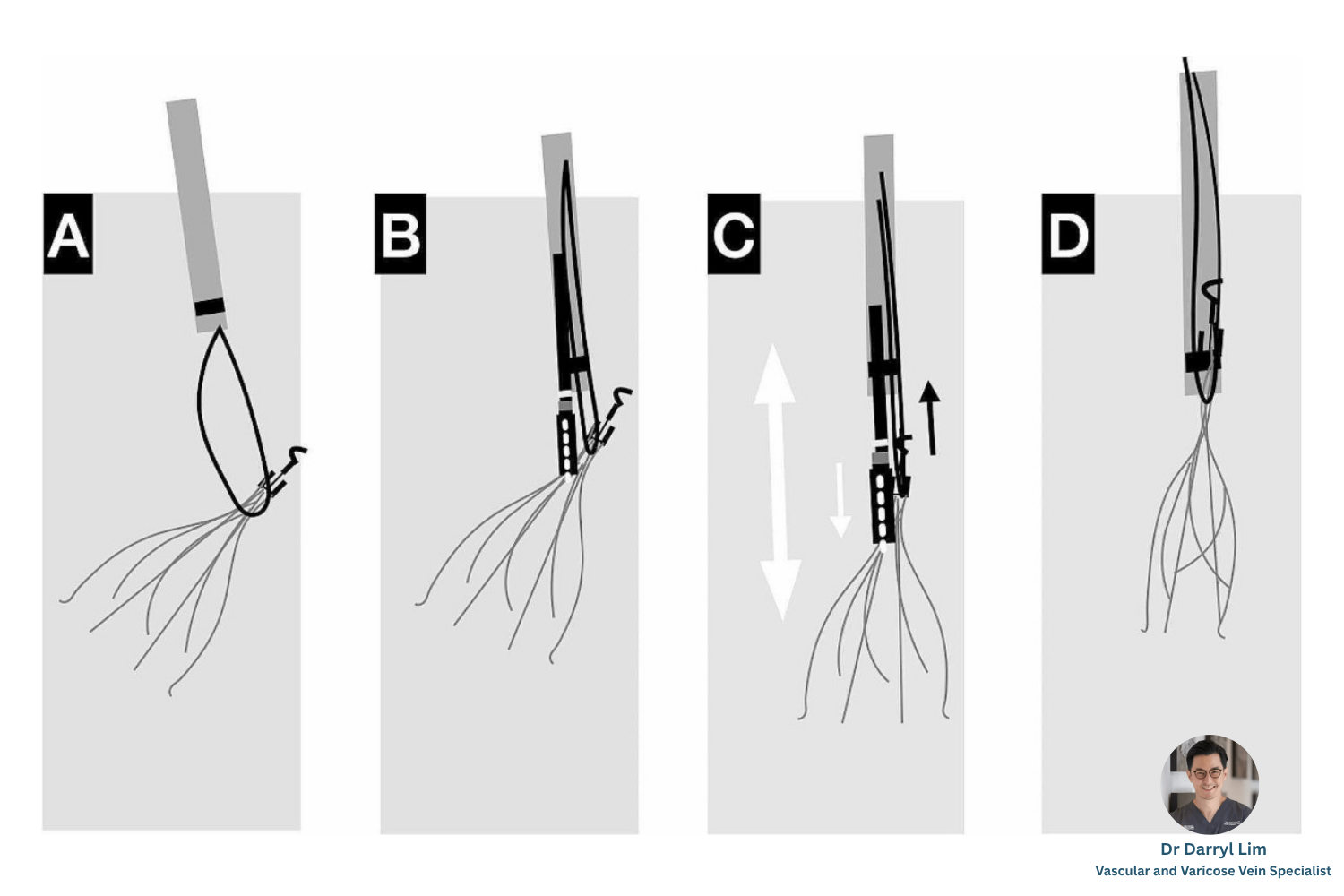
The retrieval procedure is similar to insertion. A catheter is inserted through a vein, and the filter is carefully captured and removed under imaging guidance. This procedure is generally safe and effective when performed by an experienced vascular specialist.
What to expect after the procedure?
Most patients can return home on the same day or the following day after the procedure. You will be advised to resume light activities soon after to promote healthy blood circulation.
Recovery is typically quick, with most individuals returning to normal activities within a short period. Your doctor will provide guidance on follow-up care and monitor whether and when the filter should be removed.
What are the risks associated with IVC Filter Insertion / Retrieval?
IVC filter procedures are generally safe, but as with any medical intervention, there are potential risks. Minor bruising or discomfort at the insertion site may occur but usually resolves quickly.
Rare complications include filter migration, blockage of the vein, or difficulty during retrieval. There is also a small risk of infection or bleeding. Proper follow-up and timely retrieval significantly reduce these risks.
Conclusion
IVC filter insertion is an effective, minimally invasive procedure that provides critical protection against pulmonary embolism in high-risk patients. Equally important is timely retrieval to prevent long-term complications. With proper evaluation and expert care, both insertion and removal can be performed safely, offering patients peace of mind and improved outcomes.
FAQ's about IVC Filter Insertion / Retrieval
An IVC filter is inserted through a minimally invasive procedure where a catheter is guided through a vein in the neck or groin into the inferior vena cava. Using imaging guidance, the filter is then deployed and positioned securely within the vein.
The procedure is generally not painful as it is performed under local anesthesia with sedation. Patients may feel slight pressure during insertion, but discomfort is minimal.
Recovery is usually quick. Most patients can return home on the same day or the next day and resume normal daily activities within a short period, depending on their overall condition.
Yes, in many cases. Temporary IVC filters should be removed once the risk of blood clots has decreased. Timely retrieval helps prevent potential long-term complications.
IVC filter retrieval is performed using a similar minimally invasive approach. A catheter is inserted into a vein, and the filter is carefully captured and removed under imaging guidance.
Leaving a filter in place longer than necessary may increase the risk of complications such as filter migration, fracture, or blockage of the vein. This is why regular follow-up is important.
IVC filters are typically recommended for patients with deep vein thrombosis (DVT) or those at high risk of pulmonary embolism, especially if they cannot take blood-thinning medications or if these medications are ineffective.
Some IVC filters are permanent, but many are designed to be temporary and retrievable. Your doctor will determine the most suitable type based on your condition.
While generally safe, risks may include minor bruising, bleeding, infection, or rare complications such as filter movement or difficulty during retrieval.
Your vascular specialist will monitor your condition through follow-up visits and imaging. Once your risk of blood clots has reduced, they will advise whether it is safe and appropriate to remove the filter.