One of the most common questions patients ask before treatment is simple: “What actually happens to the varicose vein after it is treated?”
It’s a fair question. Many people expect the vein to disappear immediately. However in reality, the process is a little more gradual. Modern varicose vein treatments are designed to close, seal, or remove the faulty vein so blood can reroute through healthier veins. After that, the body slowly breaks down and absorbs the treated vein over time.
The encouraging part is that symptoms such as heaviness, aching, swelling, and throbbing often improve before the cosmetic appearance fully settles.
In this article, Dr Darryl Lim, a vascular and varicose vein specialist in Singapore, explains what happens after varicose vein treatment, what recovery usually feels like, and when to seek advice if something does not seem right.
How modern varicose vein treatment works
Varicose veins usually happen because vein valves are not working properly. Instead of blood flowing smoothly upwards towards the heart, blood falls backwards and pools in the leg. This is called venous reflux (or Chronic Venous Insufficiency).
Modern treatments aim to deal with this underlying reflux by:
- Closing or sealing the faulty vein
- Redirecting blood into healthier veins
- Reducing pressure in the superficial venous system
- Improving symptoms and lowering the risk of progression
Common treatment options include:
- Radiofrequency ablation (RFA)
- Medical adhesive “glue” closure (VenaSeal)
- Ultrasound-guided sclerotherapy
- Mini Phlebectomies for bulgy varicose veins
Once a refluxing superficial vein is closed, the body simply reroutes blood through healthier deep and superficial veins. The treated vein is no longer doing useful work for your circulation.
What happens immediately after treatment?
Immediately after treatment, the most important change is functional: the faulty vein has been closed or removed from the reflux pathway. That means blood should no longer be pooling through that diseased vein.
(A) The vein is closed or sealed
With RFA treatment, heat is used inside the vein to close it. With medical adhesive closure, the vein is sealed. With sclerotherapy, a medication irritates the vein lining so it collapses and closes.
Different techniques work differently, but the goal is the same- stop abnormal vein reflux and reduce venous pressure.
(B) Blood flow is redirected
A common worry is: “If you close the vein, where does the blood go?”
The answer is reassuring. Blood naturally redirects through healthier veins. In fact, removing a faulty refluxing vein often improves overall venous return because the leg is no longer dealing with backward flow and pressure build-up.
(C) The vein may still look visible at first
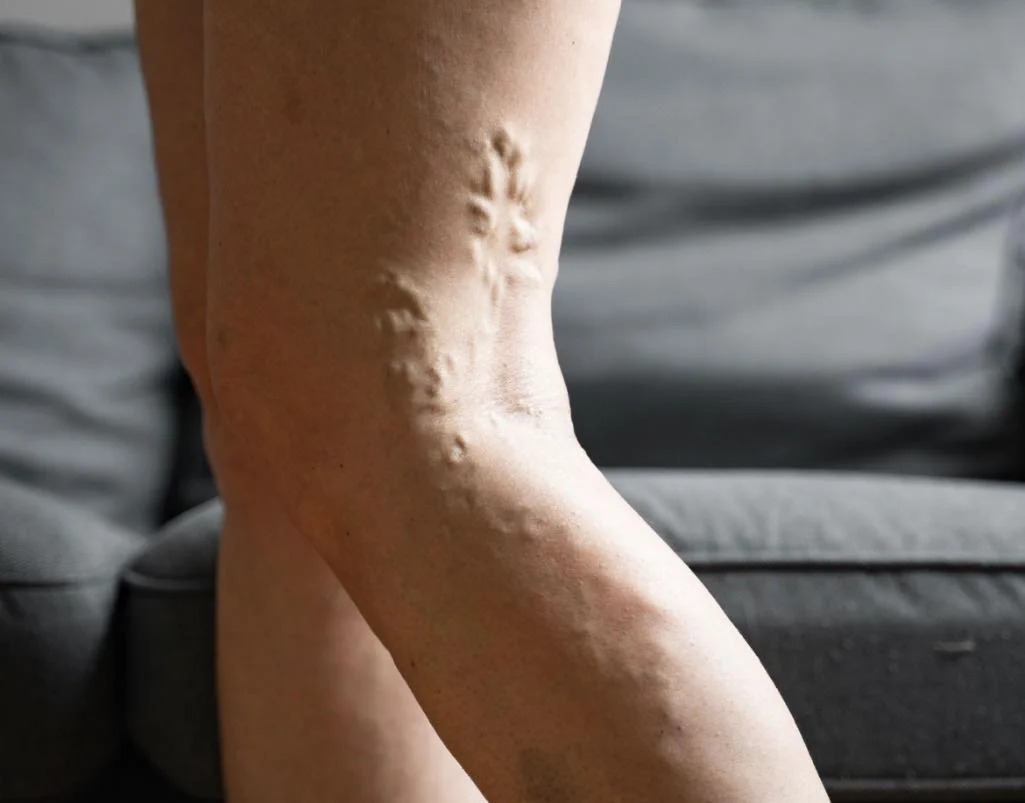
This surprises many patients. A treated vein does not always vanish immediately. It may still be visible, firm, lumpy, or slightly tender for a while (weeks to months). This does not automatically mean treatment has failed. The sealed vein has to go through a healing process before it gradually flattens, shrinks, and is absorbed by the body.
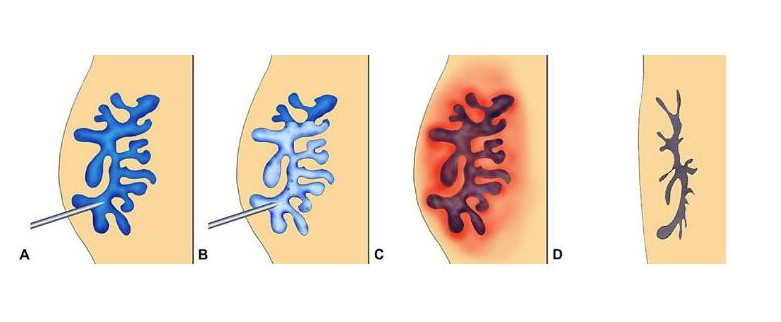
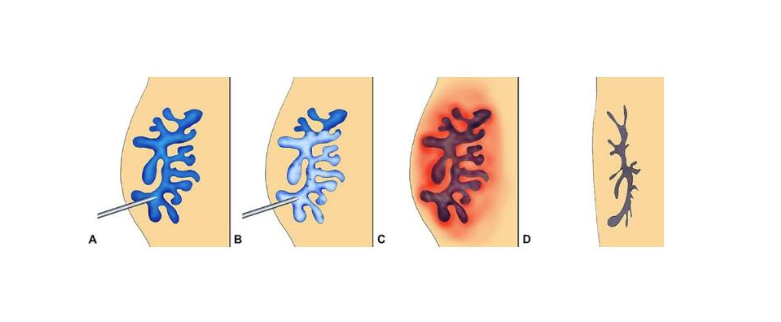
Progression of Vein Closure after Sclerotherapy Treatment. A) Puncture of diseased vein B) Injection of sclerosant C) Inflammatory Phase after vein closure (can last for a few weeks) D) Vein scarring and contraction after a few months, followed by gradual reabsorption by body
What is normal in the first few days?
Most patients recover quickly after modern varicose vein treatment, but some temporary symptoms are expected.
You may notice:
- Mild bruising
- Tightness along the treated vein
- Tenderness or soreness
- Mild swelling
- A firm or “cord-like” feeling under the skin
- Small lumps where surface veins were treated
These changes are usually part of normal healing. They are often more noticeable when larger veins have been treated or when microphlebectomy has been performed for prominent bulging veins.
Most people can walk immediately and return to routine daily activities shortly after the surgery, depending on the extent of treatment and their doctor’s advice.
Why does the treated vein feel firm or “cord-like”?
A firm or cord-like treated vein is one of the most common post-treatment concerns!
After ablation or sclerotherapy, the treated vein closes and becomes inflamed as part of the healing process. This can make it feel like a firm cord under the skin. In many cases, this gradually softens over weeks to months as the body breaks the vein down.
This is usually not dangerous, but it should be improving with time. If the area becomes increasingly painful, red, hot, or swollen, it is worth getting reviewed.
When do symptoms improve?
Symptoms often improve before the veins fully fade.
Many patients notice that their legs feel lighter within the first few weeks. Aching, throbbing, and end-of-day heaviness may reduce as venous pressure improves. Swelling may also improve, although this can take longer if swelling has been present for a long time or if there are other contributing factors.
A useful way to think about it is this- Symptom improvement usually comes first. Cosmetic improvement takes longer.
So if your legs feel better but the treated vein is still visible, that can still be part of a normal recovery pattern.
When do varicose veins fade after treatment?
The timeline depends on the size of the vein, the treatment used, and your body’s healing response.
As a general guide:
- First few days: bruising, tightness, and mild soreness may be present
- First few weeks: heaviness and aching often improve
- 6–12 weeks: treated veins and lumps usually become less noticeable
- Several months: larger veins continue to flatten and fade
- 3–6 months or longer: final cosmetic results become clearer
Smaller veins may fade relatively quickly. Larger varicose veins, especially longstanding ones, may take months to fully settle.
Why can I still see veins after treatment?
This is very common, and there are a few possible reasons.
First, the treated vein may simply be going through the normal healing process. It can remain visible or firm before gradually fading.
Second, some visible veins may be branching veins that need staged treatment- think of the main treated vein as a tree trunk, and the branching veins as the tree’s branches and leaves. Treating the main refluxing vein reduces the underlying pressure, but surface branches or spider veins may still need additional sclerotherapy or mini phlebectomies later.
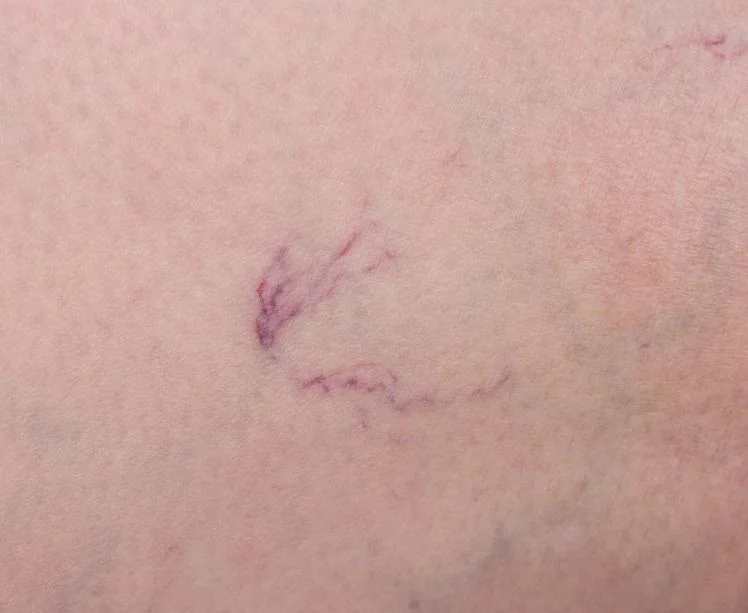
Third, not every visible vein is the same. Large bulging varicose veins, reticular veins, and spider veins behave differently and may require different treatment approaches (eg. sclerotherapy or VeinGogh for small spider veins, mini phlebectomies for bulgy varicose veins).
This is why follow-up matters. The aim is not just to close one vein, but to treat the overall reflux pattern properly.
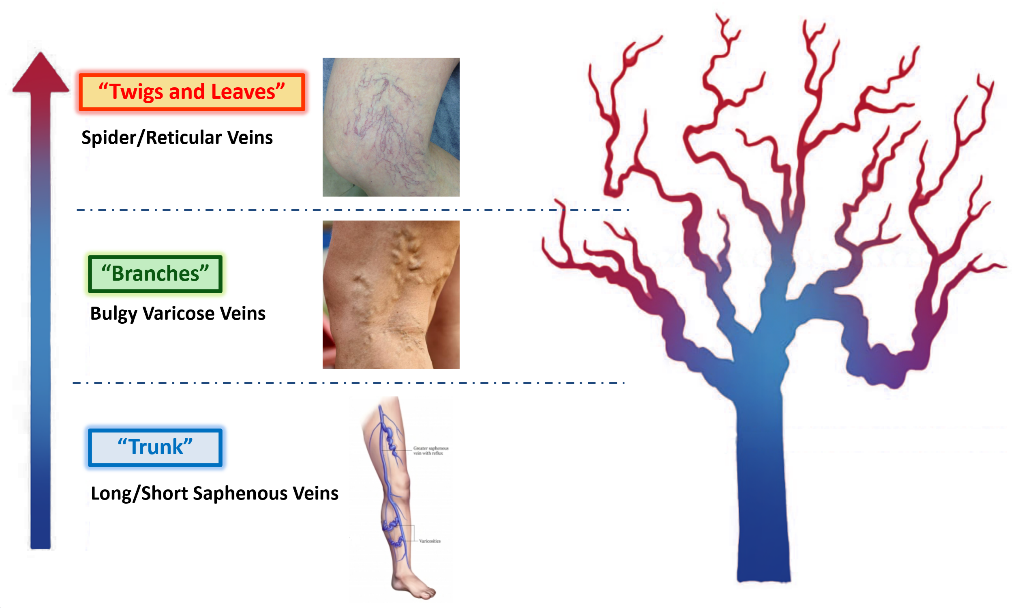
Visualising the venous system as a tree.Truncal reflux treatment (eg. RFA, Clarivein) treats the “trunk or root” of the problem. Mini phlebectomies treat the bulgy varicose veins (“branches”), and the cosmetic spider veins (“leaves and twigs”) are treated with sclerotherapy or VeinGogh.
What to expect after specific treatments
After Radiofrequency Ablation (RFA)
After RFA, the treated vein is sealed from the inside and gradually absorbed by the body. It is common to feel tightness, pulling, or a cord-like sensation along the treated vein. Mild bruising and tenderness can occur, but most patients return to normal walking quickly.
After Sclerotherapy
Sclerotherapy works by closing smaller veins or selected refluxing branches with an injected medication. The veins then fade over time.
It is normal for treated veins to look darker or feel slightly lumpy before they improve. Multiple sessions may be needed, especially for spider veins or more widespread surface veins.
After Mini Phlebectomies
Mini phlebectomies remove selected surface varicose veins through tiny punctures. Results for prominent bulging veins can be quite direct but bruising and tenderness may last longer compared with ablation alone.
Do varicose veins come back after treatment?
Successfully treated veins usually remain closed or removed. In that sense, the same treated vein typically does not “come back”.
However, new varicose veins can develop over time because the underlying risk factors still exist. The risk of recurrence is generally quoted to be somewhere between 5-10%. These may include:
- Genetics
- Prolonged standing or sitting
- Pregnancy history
- Weight gain
- Age-related vein changes
- Ongoing venous pressure in other vein segments
This is why long-term management matters. Treatment fixes the diseased veins identified at that point in time, but it does not make someone immune to future vein problems.
How to improve results after treatment
Post-treatment care plays a real role in comfort and recovery.
Walk regularly. Walking is one of the best things you can do after treatment. It activates the calf muscle pump, supports venous return, and reduces stiffness.
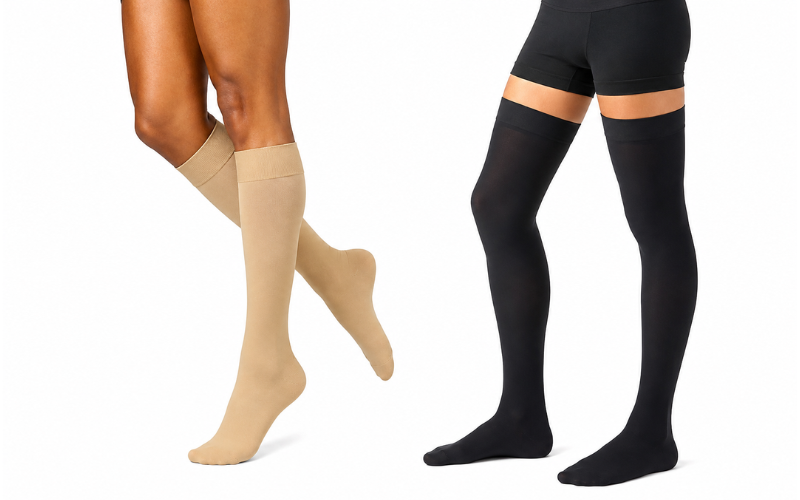
Wear compression stockings if advised. Compression stockings may be recommended for a period after treatment (usually for about 1-2 weeks post-surgery), depending on the procedure and your vein pattern. They can reduce swelling, improve comfort, and support healing.
Avoid long periods of immobility. Try not to sit or stand still for long stretches, especially in the first few days. Gentle movement is usually better than complete rest.
Follow your review plan. Follow-up is useful because it allows your doctor to check healing, confirm that the treated vein is closed, and decide whether any remaining branches or spider veins need staged treatment.
If you are unsure whether what you are feeling is normal, it is better to ask rather than guess.
Why early treatment matters
Treating varicose veins earlier often means treating the disease before it progresses into more troublesome stages.
Untreated venous reflux can eventually lead to:
- Chronic swelling
- Skin itching or venous eczema
- Brown ankle pigmentation
- Lipodermatosclerosis
- Venous ulcers
Early treatment can reduce venous pressure, improve symptoms, and lower the risk of skin damage over time.
When to consider a specialist evaluation
If you have varicose veins with symptoms such as heaviness, aching, swelling, night cramps, itching, or skin changes, it is worth having the veins properly assessed.
A good evaluation usually includes:
- A detailed symptom review
- Clinical examination
- Duplex ultrasound to map reflux and vein function
Dr Darryl Lim can assess your symptoms and, when indicated, perform ultrasound mapping so treatment is planned around the actual reflux pattern rather than just the visible veins.
Conclusion
After treatment, varicose veins do not always disappear immediately. The treated vein is usually closed, sealed, or removed, and blood is redirected through healthier veins. Over time, the body gradually breaks down the treated vein and the visible appearance improves.
Symptoms such as heaviness, aching, and swelling often improve earlier than the cosmetic result. Some firmness, bruising, or lumpiness can be normal during healing, especially in the first few weeks. If symptoms persist, worsen, or new veins remain visible, follow-up helps determine whether further staged treatment is needed.
Modern varicose vein treatments are effective, but the best results come from proper diagnosis, ultrasound-guided planning, and realistic expectations during recovery.
Frequently Asked Questions(FAQ)
Do varicose veins disappear after treatment?
Yes, but usually gradually. The treated vein is closed or removed, and the body absorbs closed veins over time. Larger veins may take months to fade.
Why is my treated vein still visible?
This can be normal early on. Treated veins may remain visible or firm while healing. Some remaining branch veins or spider veins may need staged treatment.
How long does recovery take after varicose vein treatment?
Many patients return to normal daily activities quickly, but bruising, tightness, and tenderness can last days to weeks. Final cosmetic results may take several months.
Is a firm or cord-like vein normal after ablation?
Yes, it can be part of normal healing. The treated vein may feel firm as it closes and is gradually absorbed. It should improve over time.
Can varicose veins come back after treatment?
Successfully treated veins usually stay closed, but new varicose veins can develop in other veins over time. Risk of recurrence is generally quoted in the 5-10% range.
Do I need compression stockings after treatment?
Sometimes your doctor may prescribe 1-2 weeks of wearing compression stockings after your surgery. This depends on the treatment type, vein pattern, and your doctor’s advice. Compression can improve comfort and reduce swelling during recovery.
When should I call my doctor after treatment?
Call if you have severe pain, worsening swelling, spreading redness, fever, discharge, significant calf tenderness, shortness of breath, or chest discomfort.