
Compression socks may help restless or uncomfortable legs when symptoms are linked to venous pooling, swelling, varicose veins, or chronic venous insufficiency. They are not a cure for true neurological Restless Legs Syndrome, but they can reduce heaviness, aching, crampy tightness, and night-time discomfort in selected patients. If restless legs come with swelling, visible veins, or ankle skin changes, a vascular assessment may be useful.
Restless legs can be incredibly frustrating, especially when they disturb sleep. Some people describe it as an urge to move. Others feel crawling, tingling, aching, tightness, or a crampy discomfort that seems to appear the moment they lie down.
It’s no surprise that many patients search for simple ways to relieve the symptoms. One common suggestion is compression socks. But do compression socks really help restless legs?
Sometimes, yes- but it depends on the underlying cause. Compression socks are not a cure for true Restless Legs Syndrome (RLS), which is primarily neurological. But they may help if your “restless legs” are partly driven by venous reflux, leg swelling, varicose veins, or blood pooling after long hours of standing or sitting.
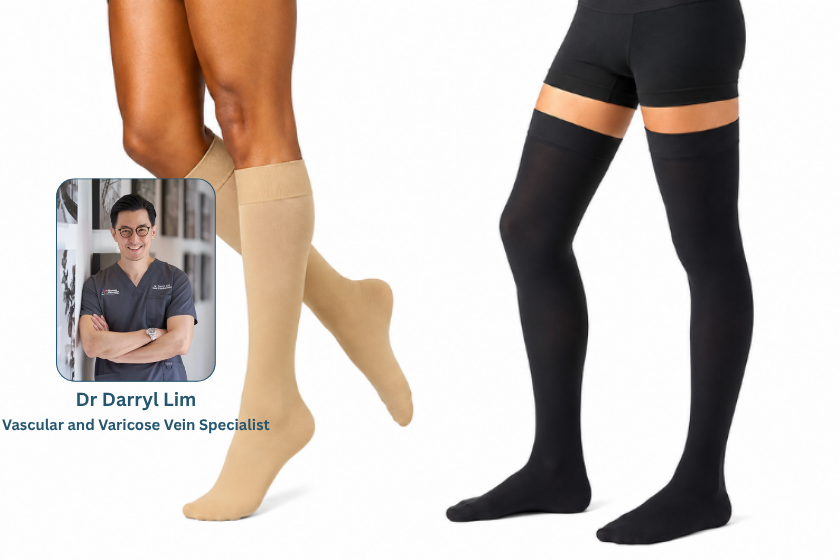
In this article, Dr Darryl Lim, a vascular and varicose vein specialist in Singapore, explains when compression socks may help, when they are unlikely to work, and when restless leg symptoms should be assessed more carefully.
What is Restless Legs Syndrome?
Restless Legs Syndrome (RLS) is a condition that causes an uncomfortable urge to move the legs, usually when resting. People often describe sensations such as:
- Aching or restlessness deep in the legs
- Pulling sensations
- Crawling or “antsy” feelings
- Tingling, Electric or buzzing feelings
Symptoms usually:
- Come on during rest or inactivity
- Worsen in the evening or at night
- Improve temporarily with movement
- Disrupt sleep
True RLS is mainly a neurological condition. It can be associated with low iron stores, pregnancy, kidney disease, certain medications, and other medical conditions.
That said, not every patient who says “restless legs” has classic RLS. Some people actually have venous symptoms that feel restless, heavy, tight, or crampy- especially at night.
When “Restless Legs” may actually be Vein-Related
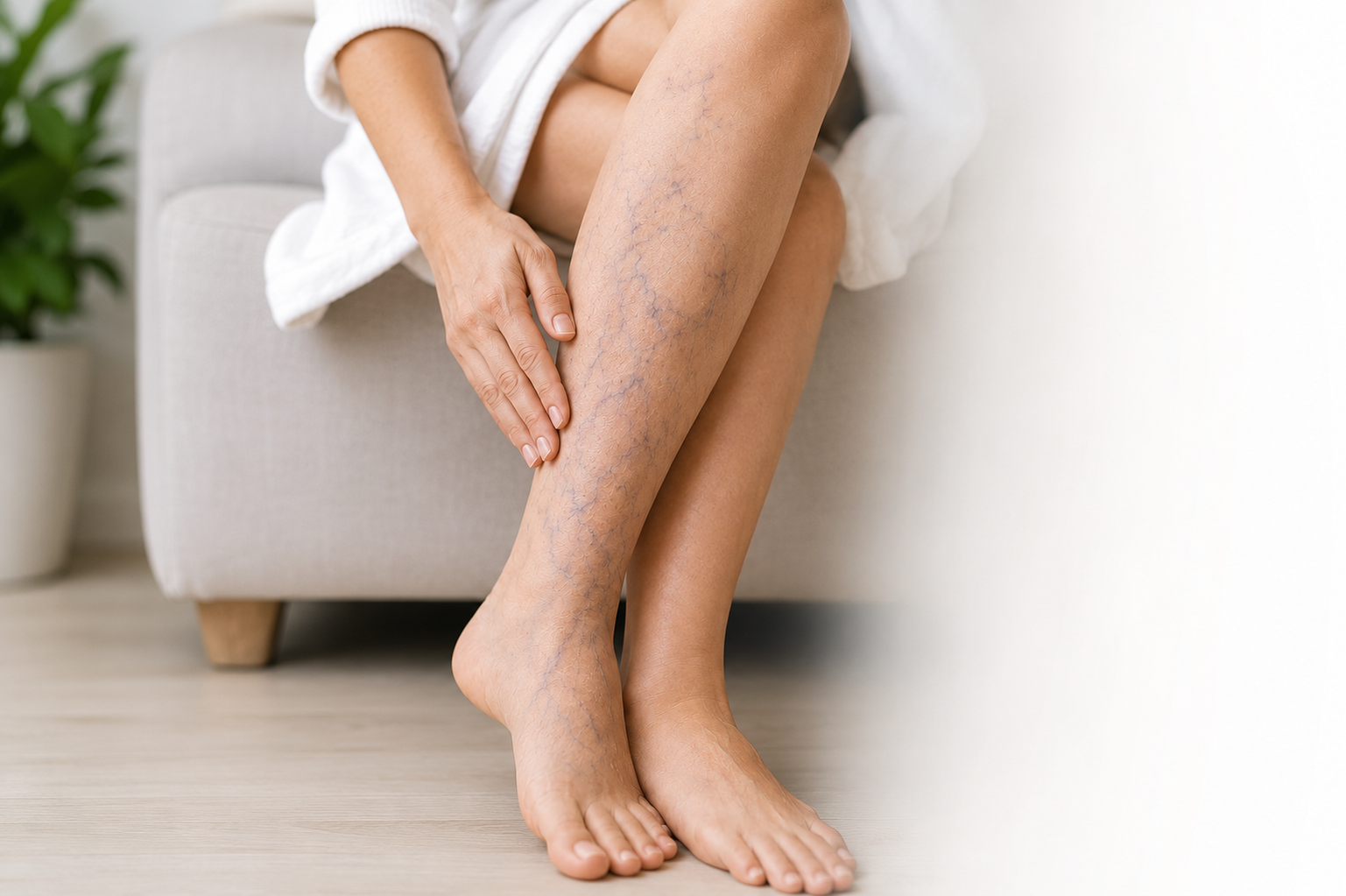
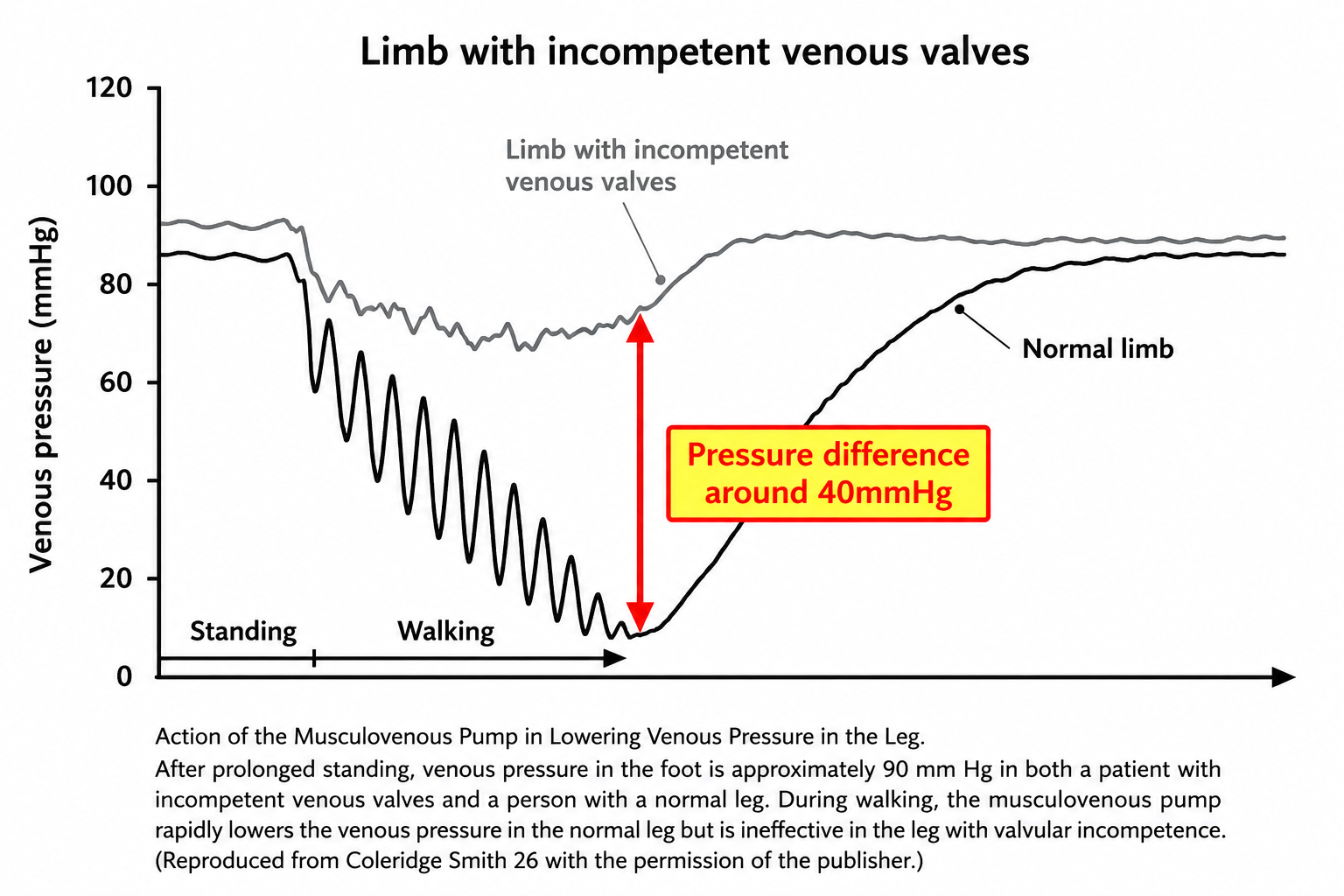
Chronic venous insufficiency happens when the valves in the leg veins do not close properly. Blood falls backwards (“venous reflux”) and pools in the lower legs.
By the end of the day, that pooling can cause:
- Heavy, crampy tight legs
- Sensation of aching or throbbing
- Ankle swelling
- Restlessness when lying down
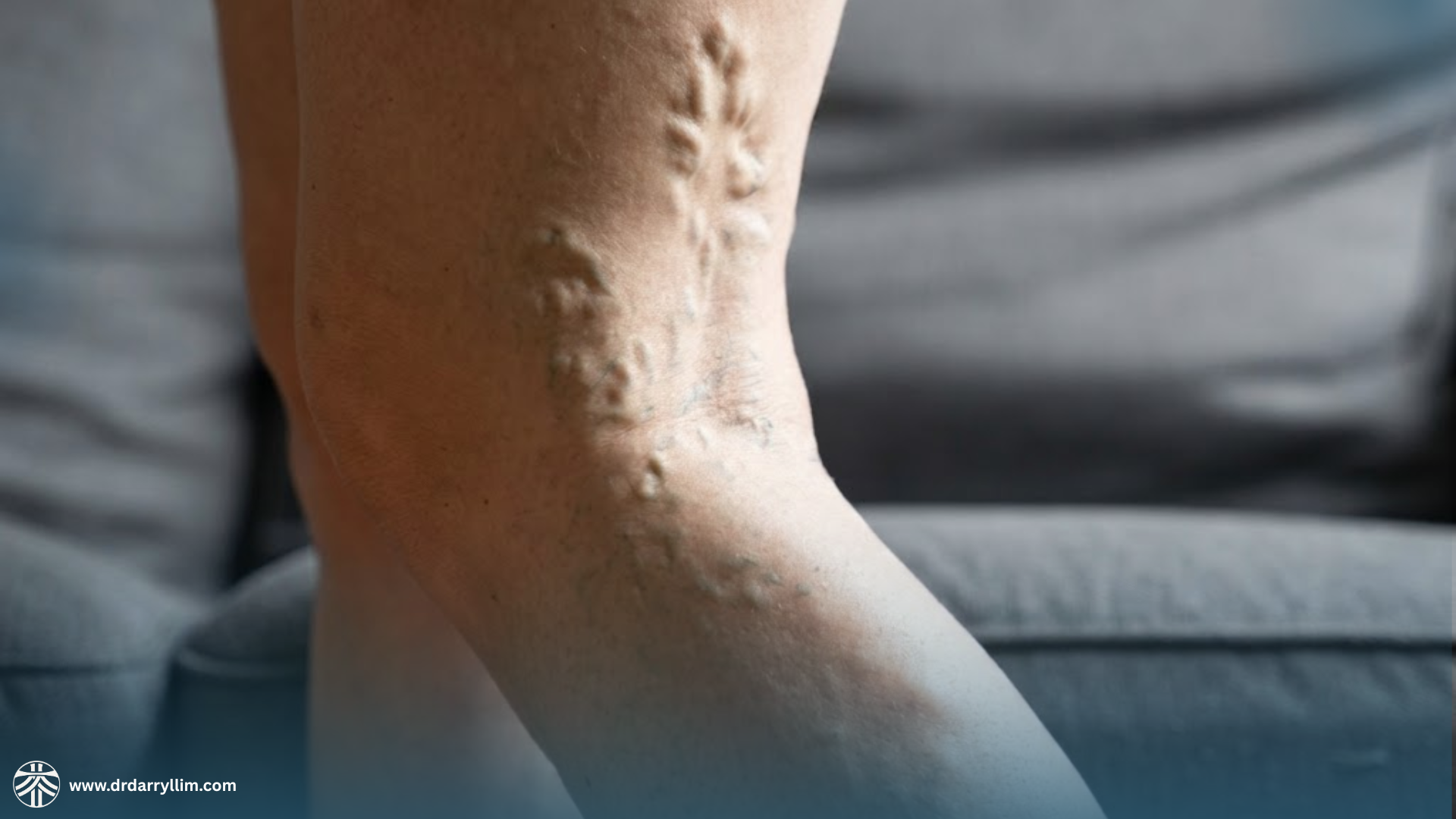
- Visible bulgy varicose veins
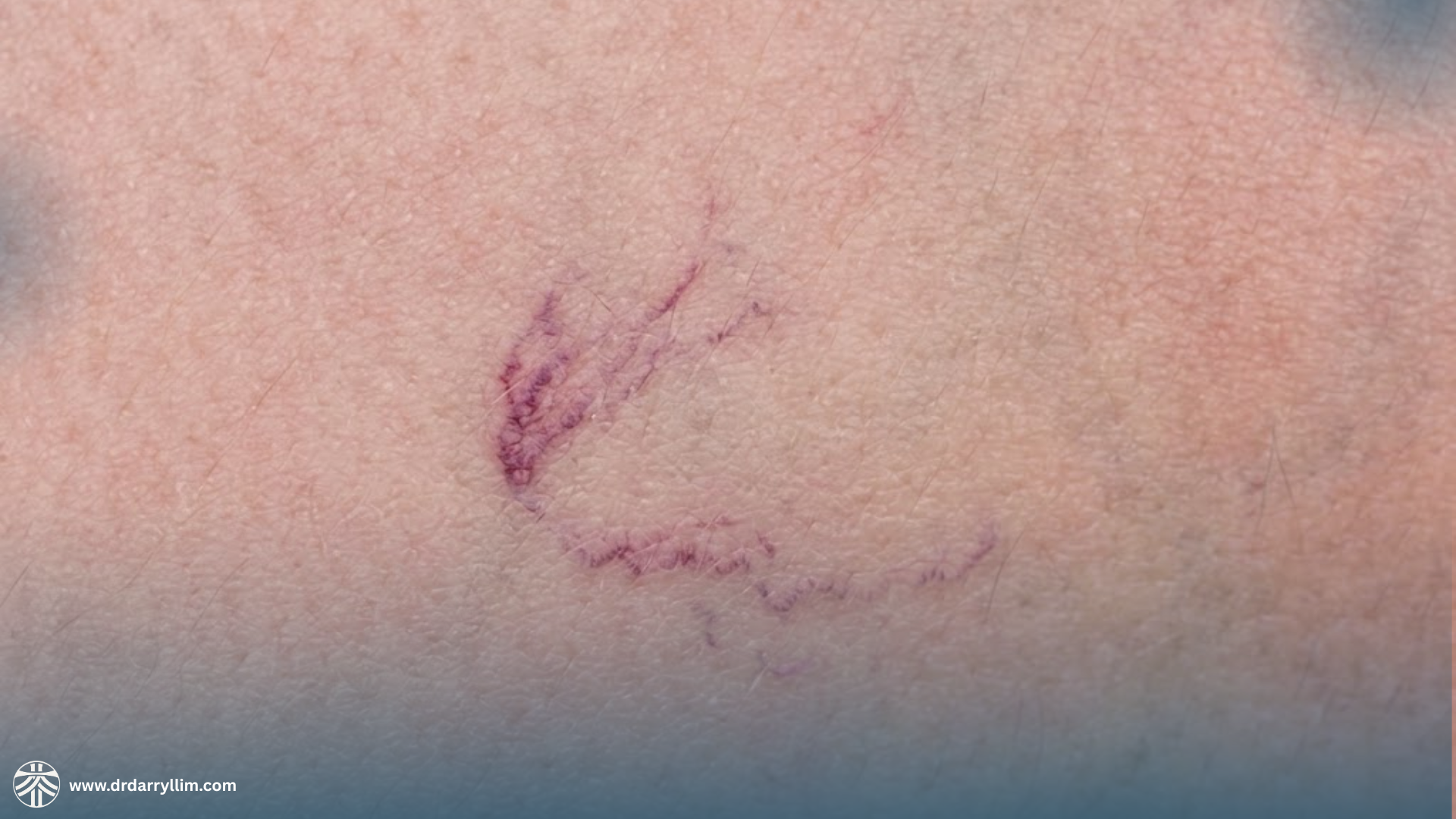
- Itching or skin discolouration (especially around the ankles)
Some patients describe these symptoms as having “restless legs” because the legs feel uncomfortable and hard to settle. The difference is that vein-related symptoms often have a pattern- they are worse after standing or sitting for long periods, and they may improve with walking, leg elevation, or compression.
In other words, it’s worth asking is these symptoms are truly caused RLS, or are your legs feeling restless because blood is pooling in your legs by the end of the day?

Do Compression Socks help Restless Legs?
Compression socks may help if the symptoms are related to circulation, swelling, or persistently elevated venous pressures.
They are more likely to help if your restless legs are accompanied by signs or symptoms of venous disease, such as:
- Leg heaviness
- Ankle swelling
- Visible varicose veins
- Symptoms that worsen by evening or after long standing
- Symptoms relieved with walking or leg elevation
- Venous skin changes such as brown discolouration, eczema or itching around the ankles and foot
They are less likely to help if your symptoms are due to:
- true neurological Restless Legs Syndrome
- Low iron stores
- Peripheral neuropathy
- Certain medications
- Kidney disease
- Sleep disorders
- Back or nerve compression
Compression socks help the circulatory component that might mimick symptoms of RLS. These socks do not directly treat the neurological cause of true RLS.
How Compression Socks work
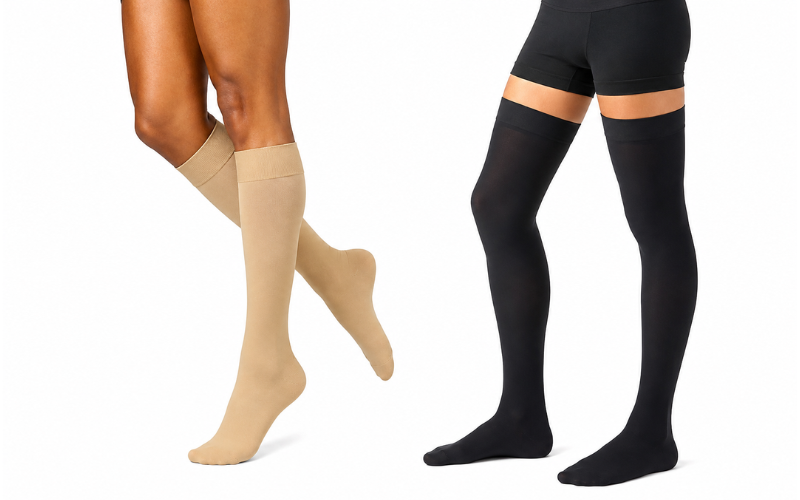
Compression socks apply graduated pressure to the legs. This means the pressure is strongest at the ankle and gradually reduces higher up the leg.
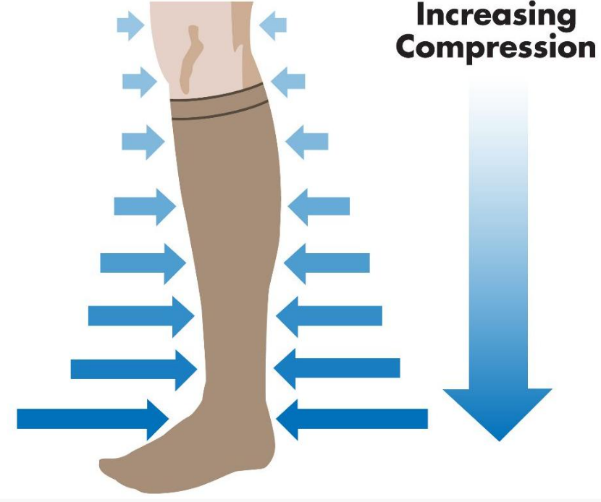
This helps to:
- Push fluid out of the lower legs, improving the return of blood back to the heart
- Reduce venous pooling around the ankles
- Decrease swelling and heaviness
- Improve comfort during long periods of standing or sitting
For patients with venous reflux or varicose veins, this can make a meaningful difference. The legs may feel less heavy, less swollen, and less uncomfortable at the end of the day.
Benefits of Compression Socks for Restless or Heavy Legs
They may reduce leg heaviness
This is one of the most common benefits. If your legs feel heavy, tired, or “full” by evening, compression can reduce pooling and make the legs feel lighter.
They may reduce ankle swelling
Swelling around the ankles is often a clue that fluid is collecting in the lower legs. Compression helps limit this build-up, especially when standing during the day.
They may improve comfort during prolonged sitting or standing
Compression socks are often useful for people who stand all day, sit at a desk for long hours, or travel frequently. They support circulation when the calf muscle pump is not active enough.
They may reduce night-time discomfort in selected patients
Compression stockings tend to work well when worn during the day. This is because the problem is often building up throughout the day. By reducing daytime pooling, the legs feel better at night.
Should you wear Compression Socks at night?
In most cases, compression socks are worn during the day, not while sleeping.
When you lie flat, gravity is no longer pulling blood down into the ankles in the same way. That means compression is usually most useful while you are upright, walking, sitting, standing, or travelling.
For most patients, the sensible routine is to put compression socks on in the morning, before swelling builds up, and wear them through the day (especially during long periods of standing or sitting). They are usually removed before bed, and if your legs feel swollen in the evening, a short period of elevation can help.
If symptoms are mainly at night despite good daytime habits, it is worth looking more carefully at the underlying cause.
Choosing the right compression level
Compression socks come in different classes, which refer to different levels of pressure. Mild to moderate compression is commonly available over the counter, but the “right” class depends on your symptoms, leg size, skin condition, and overall circulation status.
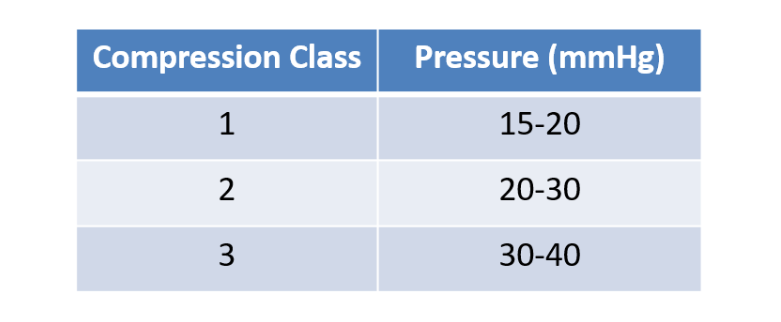
As a rule of thumb, they should feel supportive, not painfully tight. They should not dig into the skin, leave deep painful marks, or cause numbness, tingling, colour change, or worsening discomfort. Proper sizing matters, so it is better not to guess.
If you have foot wounds, poor pulses, very cold feet, or known peripheral artery disease, seek medical advice before using compression. In patients with significant peripheral arterial disease, compression can be unsafe unless a physician has first assessed the circulation to the leg and foot.
When to seek Medical Advice or a Vascular Evaluation
You should consider medical review if:
- Symptoms are frequent or worsening
- Sleep is significantly disrupted
- Leg swelling is present
- You have visible varicose veins
- There is aching, heaviness, or throbbing after standing
- You notice ankle itching, eczema, or brown discolouration
- Symptoms affect daily activities
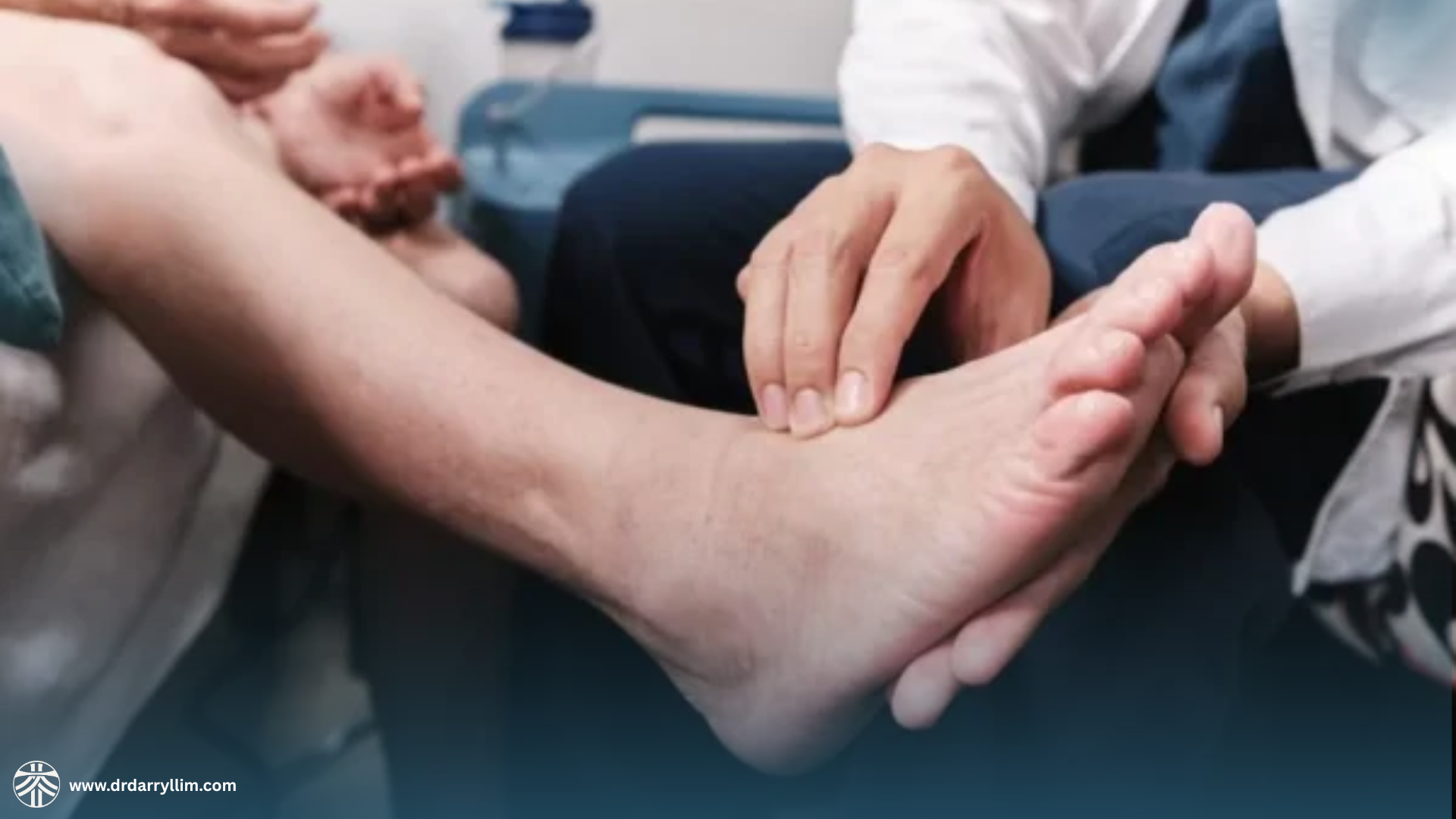
The goal is to work out whether symptoms are vascular, neurological, musculoskeletal, medication-related, or possibly due to another medical condition.
A vascular assessment is especially useful if restless leg symptoms come with swelling, heaviness, visible veins, or skin changes.
Dr Darryl Lim can assess your symptoms and, when indicated, arrange a duplex ultrasound scan to check for venous reflux or other circulation issues. This helps determine whether compression socks are enough, or whether underlying vein treatment may be needed.
Conclusion
Compression socks may help restless legs when the symptoms are related to varicose veins, venous reflux, or chronic venous insufficiency. They are less likely to help true neurological Restless Legs Syndrome unless there is also a circulation-related component.
For most people, compression socks are recommended worn during the day, especially during long periods of standing or sitting, rather than while sleeping.
If your restless legs come with ankle swelling, visible veins, heaviness, aching, or venous skin changes, it is worth getting assessed by a vascular surgeon. A duplex ultrasound can clarify whether venous reflux is contributing, and whether compression socks alone are enough or if further treatment may be needed.
Frequently Asked Questions (FAQ)
Do compression socks really help restless legs?
They may help if symptoms are related to venous pooling, swelling, or varicose veins. They are less likely to help true neurological Restless Legs Syndrome unless a vascular component is also present.
Can compression socks cure Restless Legs Syndrome?
No. Compression socks do not cure true RLS. They may reduce symptoms of heaviness, aching, and restless discomfort if circulation problems are contributing.
Can I wear compression socks while sleeping?
Usually not. Compression stockings are typically worn during the day and removed before sleep, unless your doctor specifically advises night-time use.
What compression level is suited for restless legs?
It depends on your symptoms and circulation status. Mild to moderate compression may help some patients, but proper fit matters more than simply choosing a higher pressure.
Are compression socks safe?
They are generally safe when properly fitted. However, patients with severe peripheral artery disease, foot wounds, very cold feet, poor pulses, or certain skin conditions should seek medical advice before using compression.
When should I see a doctor?
If symptoms are persistent, worsening, affecting sleep, or associated with swelling, visible veins, or ankle skin changes, evaluation by a vascular surgeon is recommended.