
One common question patients ask before booking a vascular consultation is: “Do I need to see a GP first?” The short answer is: not always.
If you are seeing a private vascular surgeon in Singapore, you can usually book an appointment directly without a GP referral. However, a referral may still matter if you are trying to access subsidised public hospital care, make an insurance claim, or use corporate medical benefits.
In other words, the answer depends less on whether a vascular surgeon can see you, and more on which payment or insurance pathway you are using.
In this article, Dr Darryl Lim, a vascular and endovascular surgeon in Singapore, explains when a referral is needed, when you can self-refer, and when you should skip the referral process and go straight to the emergency department.
When do you need a referral, and when don’t you?
The need for a referral depends on three main things:
1. Whether you are seeing a private or public specialist
2. Whether you want subsidised rates or private care
3. Whether your insurer or employer medical benefits require a referral
So it helps to separate the pathways.
Private Vascular Clinic or Private Hospital: usually no referral needed
If you are seeing a vascular surgeon in private practice, you can usually book directly. You do not need permission from a GP, polyclinic or public hospital first.
This is a common route for patients who:
- Prefer an earlier appointment
- Have private insurance or employer benefits
- Are self-paying
- Want to choose a specific specialist
- Already suspect a vascular problem, such as varicose veins, leg swelling, diabetic foot wounds or poor circulation
That said, a referral letter can still be useful. It gives the specialist background information, especially if you have already seen a GP or another doctor.
Public hospital Specialist Outpatient Clinic: referral needed for subsidised rates
If you want to be seen at a public hospital Specialist Outpatient Clinic (SOC) at subsidised rates, you generally need to be referred through an eligible referral pathway.
The Ministry of Health (MOH) states that Singapore Citizens and Permanent Residents may receive SOC subsidies when referred from eligible sources such as public hospital A&E, inpatient care, subsidised SOCs, polyclinics and CHAS GP clinics.
If you choose to see a named specialist or self-refer without the appropriate subsidised referral pathway, private rates may apply.
For patients who prioritise lower cost, the subsidised pathway may be suitable. For patients who prioritise earlier appointments, specific specialist choice, or private insurance use, the private pathway may be more appropriate.
Integrated Shield Plans: referral requirements vary
For Integrated Shield Plans, a GP referral is not always mandatory just to see a private specialist. However, insurers may request referral letters, medical reports, scan results, or pre-authorisation documents when assessing claims or issuing a Letter of Guarantee (LOG) prior to hospitalization or surgery.
The requirements vary by insurer, policy tier, panel status and the type of treatment being planned.
A practical approach is to check with your insurer or the specialist clinic before the appointment if you are hoping to claim for:
- Specialist consultation fees
- Pre-hospitalisation scans or tests
- Day surgery or inpatient procedures
- Post-hospitalisation follow-up
- A Letter of Guarantee or pre-authorisation
A referral letter may not always be compulsory, but it can make the claims process smoother.
Corporate or employer insurance: check whether a panel GP referral is needed
Corporate medical benefits can work differently from private self-pay or Integrated Shield Plan pathways.
Some employers or corporate insurance plans require you to first see a designated panel GP. The panel GP may then issue a referral to a panel specialist before the specialist visit is eligible for cashless access or reimbursement.
Other corporate plans may allow direct specialist access, require concierge booking, or require pre-authorisation before the appointment. The safest approach is to check with your HR department, insurer, or third-party administrator (TPA) before booking if you want to claim under corporate benefits.
Ask these questions before your appointment:
- Do I need to see a panel GP first?
- Must the specialist be on the insurer or TPA panel?
- Is pre-authorisation required before the visit?
- Are scans or procedures covered separately?
- Will I be using cashless billing or reimbursement (ie selfpay first and claim)?
This is especially important for semi-elective conditions such as varicose veins, leg swelling, peripheral artery disease, poor healing wounds or diabetic foot problems.
Emergency situations: do not wait for a referral

Referral pathways are meant for elective or semi-urgent assessment. They are not meant for emergencies.
If you suspect a vascular emergency, go directly to the emergency department, or call 995 in Singapore. This is especially if you develop symptoms such as:
- Sudden severe leg pain with a cold, pale or blue foot
- Sudden breathlessness, chest pain, or coughing blood
- Major bleeding from a varicose vein that does not stop with firm pressure and elevation
- A hot, red, painful swollen leg that worsens rapidly
- Sudden weakness, slurred speech or facial droop
- Severe abdominal, back or flank pain in someone with a known aortic aneurysm
In these situations, waiting for a referral letter can delay time-critical care.
Why a GP referral can still be useful
Even when it is not strictly required, a GP referral letter can help.
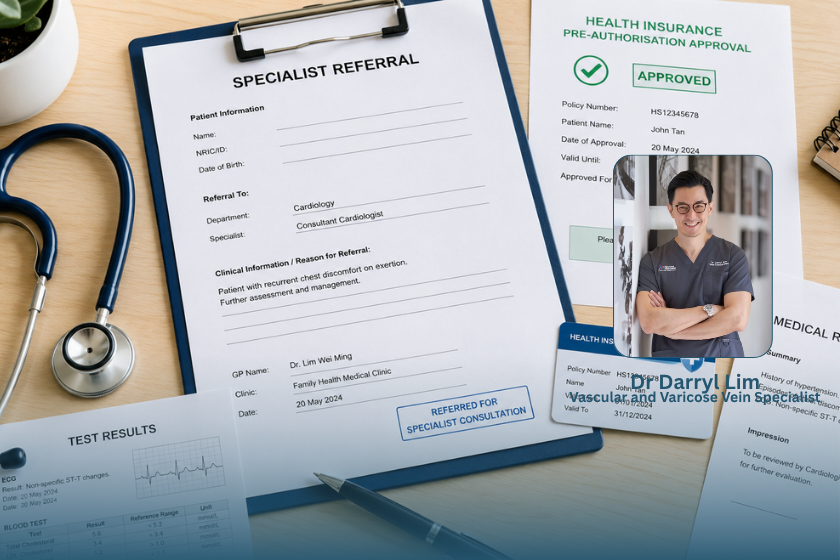
A referral letter usually includes:
- Your relevant medical history
- Current medications and allergies
- Duration and pattern of symptoms
- Previous blood tests, scans or reports
- The GP’s clinical concern
- Any urgent features that need attention
This allows the vascular surgeon to understand the context quickly and avoid repeating unnecessary tests.
For example, if you are referred for leg swelling with suspected DVT, it is helpful to know whether heart, kidney, liver, medication or other related causes have already been investigated for. If you are referred for diabetic foot wounds, details about your baseline diabetic control, medications and history of previous wound care are useful.
A referral letter is also helpful when insurance or corporate plans require documentation for claims.

How do you get a GP referral for a vascular surgeon?
The process is straightforward.
You can visit:
- A private GP
- A CHAS GP
- A polyclinic
- A telemedicine GP service (where clinically appropriate)
Explain your symptoms clearly. Mention details such as:
- Leg pain when walking
- Swelling
- Varicose veins
- Skin discolouration
- Foot wounds
- Numbness or coldness
- Previous DVT or blood clots
- Diabetes-related foot problems
If you wish to see a specific vascular surgeon in private practise, you can ask for the referral letter to be addressed accordingly. If you are trying to access subsidised public SOC care, the referral pathway and naming rules may differ, so check with the referring clinic.
Which vascular conditions are usually seen by a vascular surgeon?
A vascular surgeon manages conditions affecting the arteries, veins and lymphatic system, excluding the heart and brain.
Common reasons to see a vascular surgeon include:
- Varicose veins with aching, heaviness, swelling, night cramps or skin changes
- Chronic venous insufficiency with ankle pigmentation, eczema or leg ulcers
- Leg swelling that does not resolve
- Deep vein thrombosis or suspected blood clots
- Peripheral artery disease with calf pain when walking
- Cold feet, leg pain at rest, or poor circulation
- Diabetic foot wounds or non-healing foot sores
- Venous leg ulcers that are slow to heal
- Abdominal aortic aneurysm
- Carotid artery disease
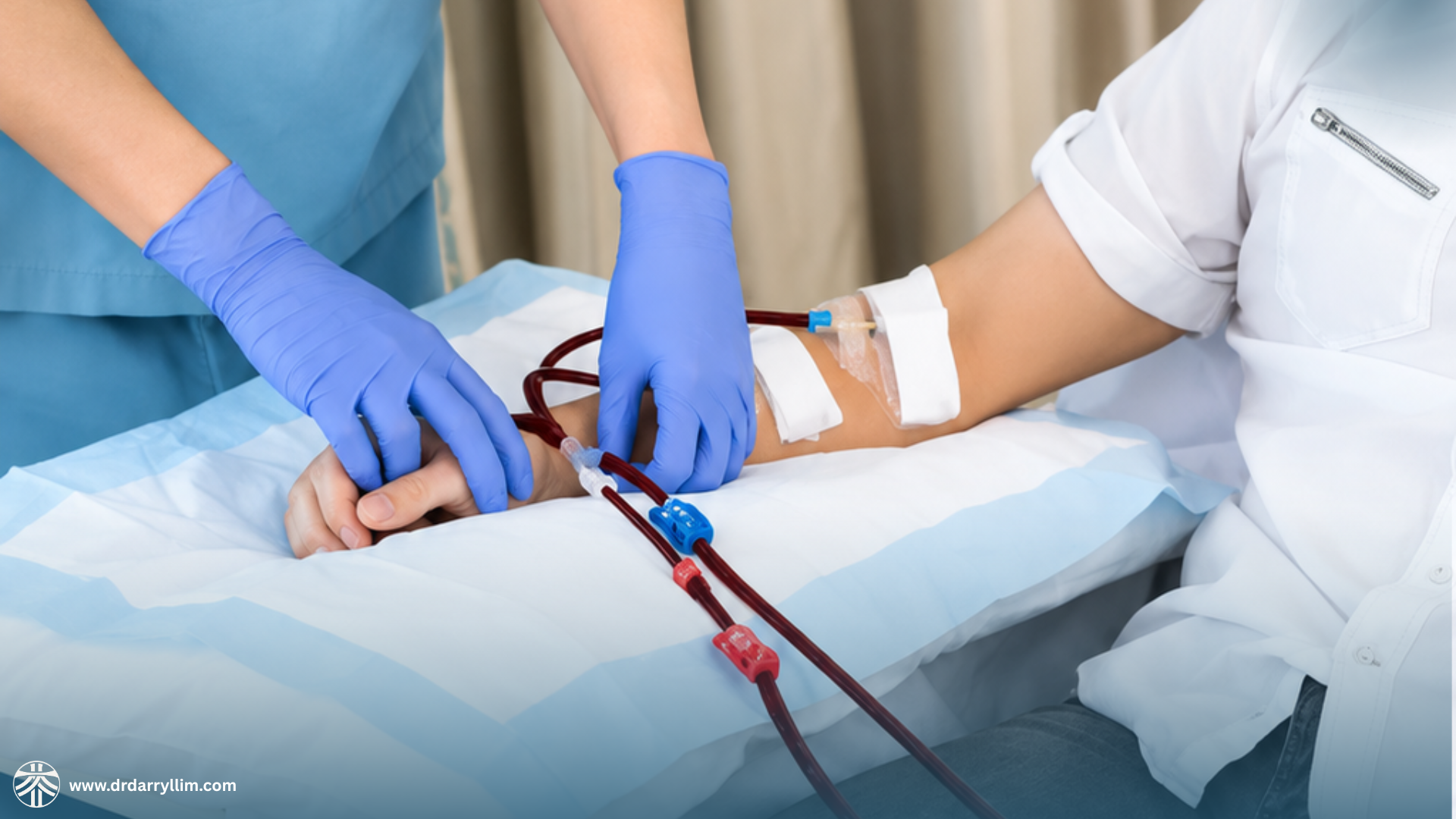
- Dialysis access problems, including AV fistulas and grafts
- Lymphoedema, especially when overlapping with venous disease
If you are unsure whether your symptoms are vascular, a GP can help triage. But if your symptoms clearly involve circulation, wounds, visible veins, swelling or walking-related leg pain, direct vascular assessment is often reasonable in the private setting.
Do you need a referral for MediSave or MediShield Life?
For a MediSave surgical claim itself, the key issue is usually whether the procedure is an approved claimable procedure under the appropriate coding and withdrawal rules. A GP referral is not usually the determining factor.
For MediShield Life, claims are generally linked to eligible inpatient or day surgery treatment and relevant scheme rules, rather than simply whether a GP referral exists.
For Integrated Shield Plans and corporate insurance, however, referral documentation may matter more. Some insurers or employer plans may require referral letters, pre-authorisation, or panel-routing before they recognise the consultation, scan or procedure as claimable.
This is why it is wise to check before the appointment if you are unsure.
What should you bring to your first vascular consultation?
Whether or not you have a referral letter, bring anything that helps the vascular specialist understand your condition.
Useful items include:
- Referral letter (if available)
- Current medication list
- Allergy list, including contrast dye allergy if relevant
- Previous scan reports or images
- Blood test results
- Previous hospital discharge summaries or specialist letters (if any)
- Wound photos, if the wound changes over time
- Insurance card or policy details
- Corporate insurance / TPA card, if relevant
- NRIC, FIN or passport
- Comfortable clothing that allows leg examination (will be helpful to bring a pair of shorts to change into if you are scheduled for an ultrasound scan of your legs)
For leg symptoms, try to remember when symptoms occur, what makes them worse, and what improves them. For example, calf pain when walking that improves with rest suggests a different problem from ankle swelling that worsens by evening.
When should you book a vascular consultation?
Consider booking a vascular consultation if you have:
- Visible varicose veins with discomfort, heaviness or swelling
- Leg swelling that does not settle overnight
- Brown ankle discolouration, eczema or skin hardening
- Leg ulcer that is slow to heal
- Calf or thigh cramping when walking that improves with rest
- Cold feet, especially with pain at rest
- Diabetic foot wounds or non-healing toe sores
- A previous DVT or pulmonary embolism with new leg symptoms
- An incidental finding such as carotid stenosis, aortic aneurysm or arterial disease
- Dialysis access issues
Early specialist assessment helps clarify the diagnosis before complications develop.
Dr Darryl Lim can assess your symptoms and, where appropriate, arrange vascular duplex ultrasound or further imaging to identify whether the problem is venous, arterial, lymphatic, wound-related or due to other causes.
Conclusion
You do not usually need a GP referral to see a private vascular surgeon in Singapore. You can book directly.
A referral becomes important if you want subsidised public hospital specialist care, or if your insurance, Integrated Shield Plan, corporate medical scheme or TPA requires referral documentation before claims are processed.
Even when not mandatory, a referral letter can still be useful because it provides clinical background and may support insurance or corporate claims.
But for urgent vascular symptoms, do not wait for a referral. Go directly to A&E.
Frequently Asked Questions (FAQs)
Can I see a vascular surgeon without seeing a GP first?
Yes, if you are booking a private vascular consultation. A GP referral is usually not required for private specialist assessment.
Do I need a referral for subsidised public hospital care?
Usually yes. Subsidised SOC care generally requires referral from eligible sources such as a polyclinic or CHAS GP clinic, subject to prevailing MOH rules.
Does corporate insurance require a GP referral?
Some corporate plans require a panel GP referral before specialist visits are eligible for cashless access or reimbursement. Others allow direct specialist access or require pre-authorisation. Check with your HR department, insurer or TPA before booking.
Does an Integrated Shield Plan require a GP referral?
Not always, but requirements vary. Some insurers may request referral letters, reports or pre-authorisation documents when assessing claims or issuing a Letter of Guarantee (LOG).
Can a polyclinic refer me to a private vascular surgeon?
Polyclinics usually refer through the public healthcare pathway. If you want to see a specific private vascular surgeon, a private GP referral may be more straightforward, although you can also book directly in private practice.
Can I get a referral through telemedicine?
In some cases, yes. A telemedicine GP may issue a referral letter if clinically appropriate. However, urgent vascular symptoms should be assessed in person or at A&E.
Do I need a new referral for follow-up visits?
Usually not for clinical follow-up with the same specialist. However, some insurers or corporate plans may have coverage duration limits, so check your policy if claims are involved.
When should I go to A&E instead of booking a clinic appointment?
Go to A&E for sudden severe leg pain with a cold or blue foot, sudden breathlessness or chest pain, major bleeding, stroke-like symptoms, or rapidly worsening painful swelling with fever.